BY STEVE KOCH
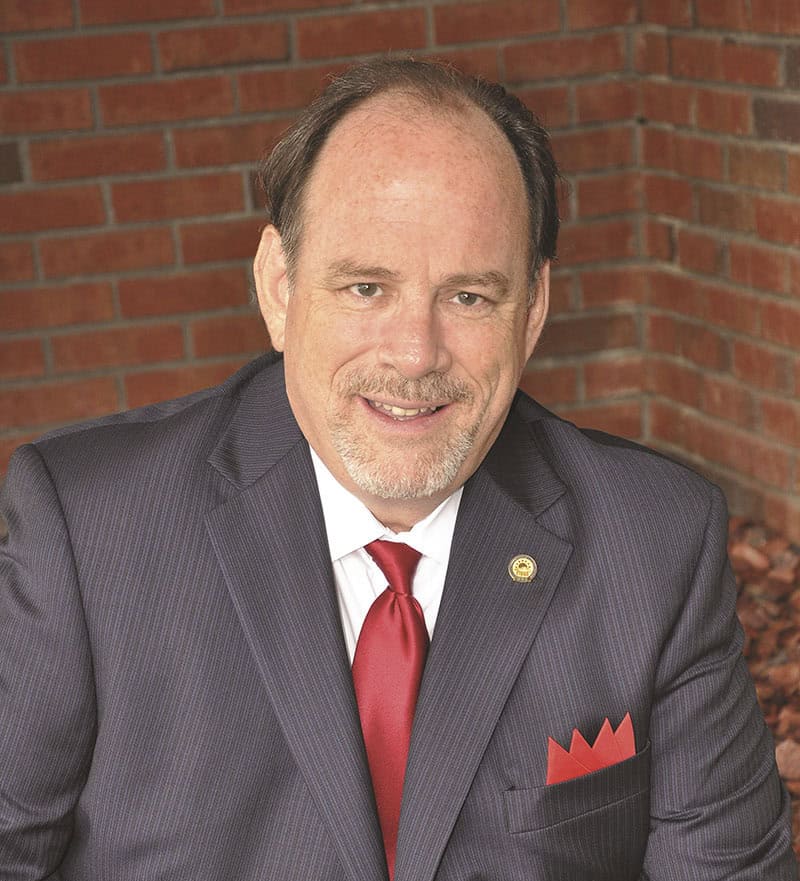
Lonny Powell – ©Serita Hult
The FTBOA is prepared for whatever the 2026 legislative session brings, CEO Lonny Powell said during a Dec. 6 appearance on the Horse Racing Radio Network’s Equine Forum podcast with Mike Penna. Powell outlined the association’s strategic approach to the decoupling threat and acknowledged that FTBOA is actively exploring development of its dormant racing permit.
When decoupling legislation emerged in early 2025, the FTBOA was already engaged. Powell said the Stronach Group had contacted the association directly. The FTBOA’s board discussed the threat at its October meeting, then-President George Isaacs issued a public warning in November and the board continued tracking developments through December and January, “way before any other organization, including [Thoroughbred Racing Initiative], was formed,” Powell said.
Powell explained why Florida’s regulatory environment demands local expertise. The state’s gaming landscape includes the Seminole Tribe—the largest gaming tribal operator in the world—and slot permits that are address-specific. A voter-approved “no casinos” law requires any expansion of Las Vegas-style gaming to pass a statewide ballot measure with 60 percent approval. (For a detailed analysis of these barriers, see the FTBOA’s recent policy brief, “Irreplaceable Gulfstream Park.”)
“Do you really think 60 percent of all the voters of Florida are going to approve a measure to allow slot machines at a racetrack?” Powell asked. “And how is the racing industry going to be able to afford [what] could go up to $100 million to run a ballot initiative?”
Looking ahead, Powell disclosed that the FTBOA holds the only remaining racing permit in the state, a not-for-profit thoroughbred permit approved in 2011 through an FTBOA wholly owned subsidiary.
“FTBOA always looked at it as an insurance policy if the tracks greatly reduced dates or decoupled,” Powell said. “That is no longer on ice. We’re starting to take a very serious look at how to make that work. We’ll have more to say about that later.”
No decoupling bill has yet been filed for the 2026 session, which begins in early January. Powell said any such legislation could appear this month. He noted that the 2025 pattern (House passage followed by defeat in the Senate) could repeat but added that the FTBOA is prepared for multiple scenarios.
Asked whether decoupling would be fatal for Florida racing, Powell said the industry would need mitigation measures or a reasonable transition.
“Nobody should be able to walk away from the industry without paying the tab,” he said. “From the FTBOA’s perspective, we’re pretty solution-driven, pretty action-driven. Our thoughts are we want to work on making sure there’s a future for racing, no matter what the scenario is.”
Powell also addressed recent public criticism from Thoroughbred Racing Initiative’s out-of-state consultant Damon Thayer, who had claimed on a Nov. 22 HRRN podcast that Florida’s breeding industry was “asleep at the wheel” when decoupling legislation emerged. FTBOA President Valerie Dailey issued a November 24 press release disputing those remarks.
Powell said TRI leadership, including its chairman, contacted him this week to apologize for and disavow Thayer’s comments, calling them unauthorized.
“I took that call as a call of sincerity and of a desire to move forward,” Powell said. “We’ve agreed that we’re going to end up putting a little bit of a gathering together of the different parties involved to see how we can proceed with what we all have in common, which is to fight decoupling.”
Powell said the takeaway is a commitment to teamwork. “Whatever differences everybody has, those should be handled internally versus… on a podcast or in a public forum where you’re hurting the very industry you say you’re trying to help.”
The FTBOA’s advocacy in Tallahassee spans three decades, during which the organization has defeated decoupling legislation in 2012, 2016, 2018, and 2021. For FTBOA’s complete legislative scorecard, see FTBOA: Florida’s Legislative Champion.
Return to the December 9 issue of Wire to Wire