
We built a legacy. We defend it. We are its future.
BY STEVE KOCH
F
lorida racing withstands constant threats. Gaming operators want revenues without races. Transportation planners want toll roads through horse country. Misinformation floods the Capitol while lawmakers sort policy from politics. Different threats. Different years. Same defender: FTBOA.
When others waver or go silent, FTBOA stands at the front and prevails. We built this legacy through legislative victories. We defend it when threatened. We are its future.
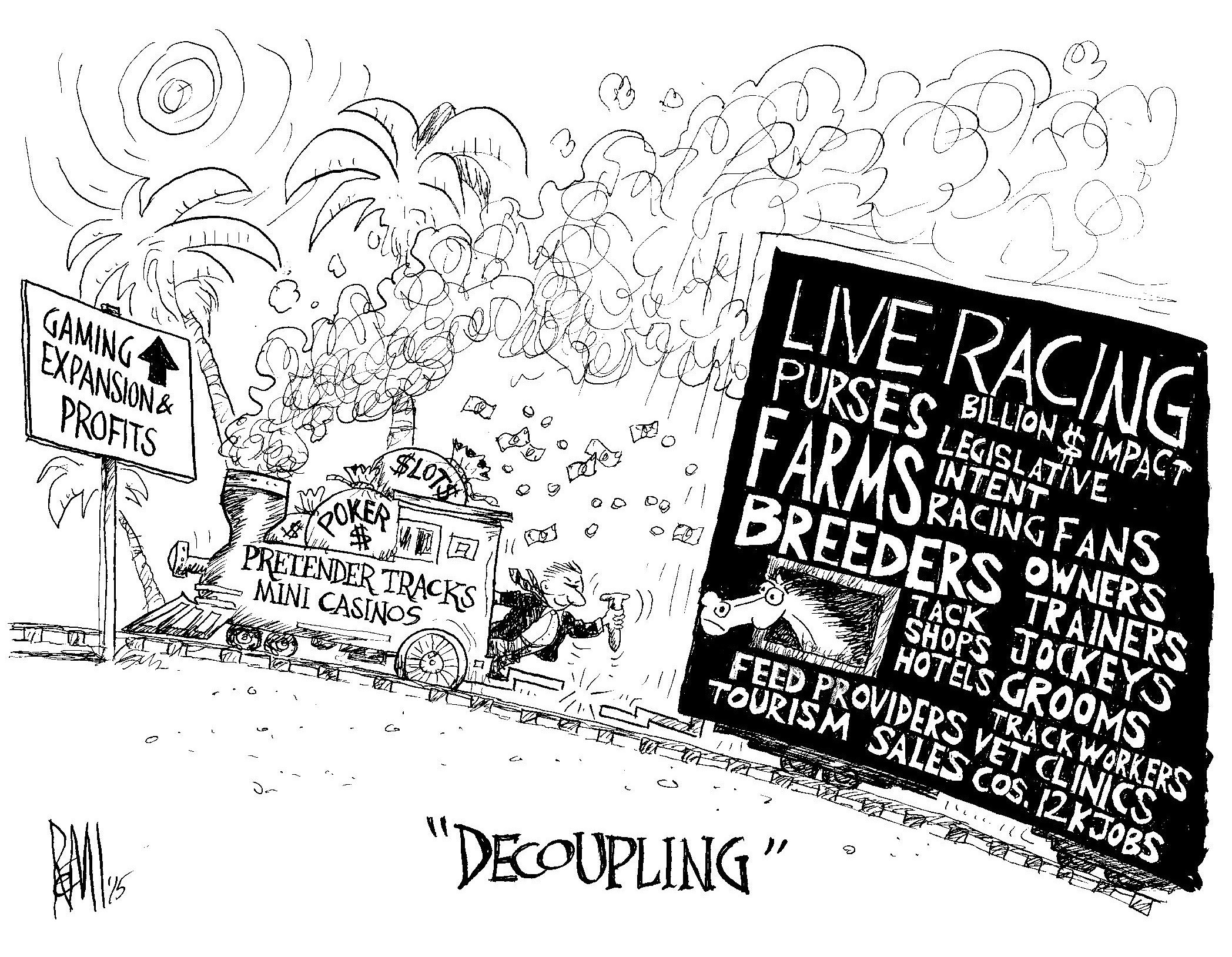
Decoupling - ©Remi Bellocq
©Remi Bellocq
We Built a Legacy
Gaming Foundations (2004-2005)
Veteran FTBOA lobbyist Matt Bryan, now retired, recalls the two-session battle:
“The first implementing bill failed, and it had nothing for horsemen anyway. Both Calder and Gulfstream made sure of that. When we came back the next session, FTBOA wrote the slots funding language directly into statute. The racetracks opposed it vigorously. We won anyway.”3
Secured the Not-For-Profit Racing Permit (2009-2011)
In 2009-2010, FTBOA President Fred Brei and lobbyist Matt Bryan secured legislation assigning a convertible Quarter Horse permit to FTBOA in Marion County.4,5 The following year, FTBOA general counsel Warren Husband and CEO Lonny Powell led the conversion, establishing Ocala Thoroughbred Racing (OTR) as a wholly-owned FTBOA subsidiary.6
FTBOA CEO Lonny Powell, who also serves as OTR’s CEO, explains the significance:
“Other industry sectors never pursued similar protections when the opportunity existed. In assigning the permit directly to FTBOA, the Legislature indicated who would serve as primary steward of Thoroughbred agriculture in Florida.”6
The permit’s structure proves critical: non-transferable under Florida law, it cannot be harvested by for-profit interests.4
Looking ahead, Powell sees OTR’s potential:
“I’m grateful for the vision and courage shown by FTBOA leadership in 2011. Our objective has always been a race meet in the Horse Capital of the World® built around competitive purses and breeder awards. OTR could provide the control and stability our industry needs, especially given ongoing decoupling threats at our existing tracks.”7
Secured Florida Owner Awards
The FTBOA secured Florida Owner Awards (FOAs) in Chapter 550.2625(6), allowing racetracks to use takeout for awards to owners of registered Florida-bred horses.8 FOAs distribute nearly $6 million annually at Gulfstream Park and Tampa Bay Downs,9 complementing the FTBOA’s breeder and stallion awards to create a three-tiered incentive structure second only to Kentucky among American breeding states.
Secured Record State Investments (2023)
Between 2023 and 2025, the FTBOA secured the highest state appropriations in Florida racing history, demonstrating its capacity to build even during political battles.
In 2023, the FTBOA delivered its most significant appropriations victory: $66 million over two years for the Thoroughbred industry through HB 7063. The FTBOA secured $5 million annually for industry incentives and promotion, pushing breeder and stallion rates to 20% of gross purses – the legislated maximum rate.10 The win included facility funding for both tracks plus over $6 million annually in tax credits to offset Horseracing Integrity and Safety Authority (HISA) assessments.11,12
Reflecting on the win, Powell emphasized patience over flash:
“Because of our ability to tell our economic story over the years, the time was right. You don’t need to apologize for getting good things done in our industry. Our industry spent way too much time trying to throw the Hail Mary, run time off the clock or waiting for the perfect legislation that never happens to make everybody happy. Instead, using more sports parlance, be satisfied with grinding out a double, a first down, just keep moving the ball forward.”13
Bryan recalls early sabre-rattling that would define later sessions:
“Gulfstream first tried to blow the bill up entirely. When that failed, they tried to keep all the money for capital expenses rather than purses or awards. We got the funding where it belonged, but their priorities were clear.”3
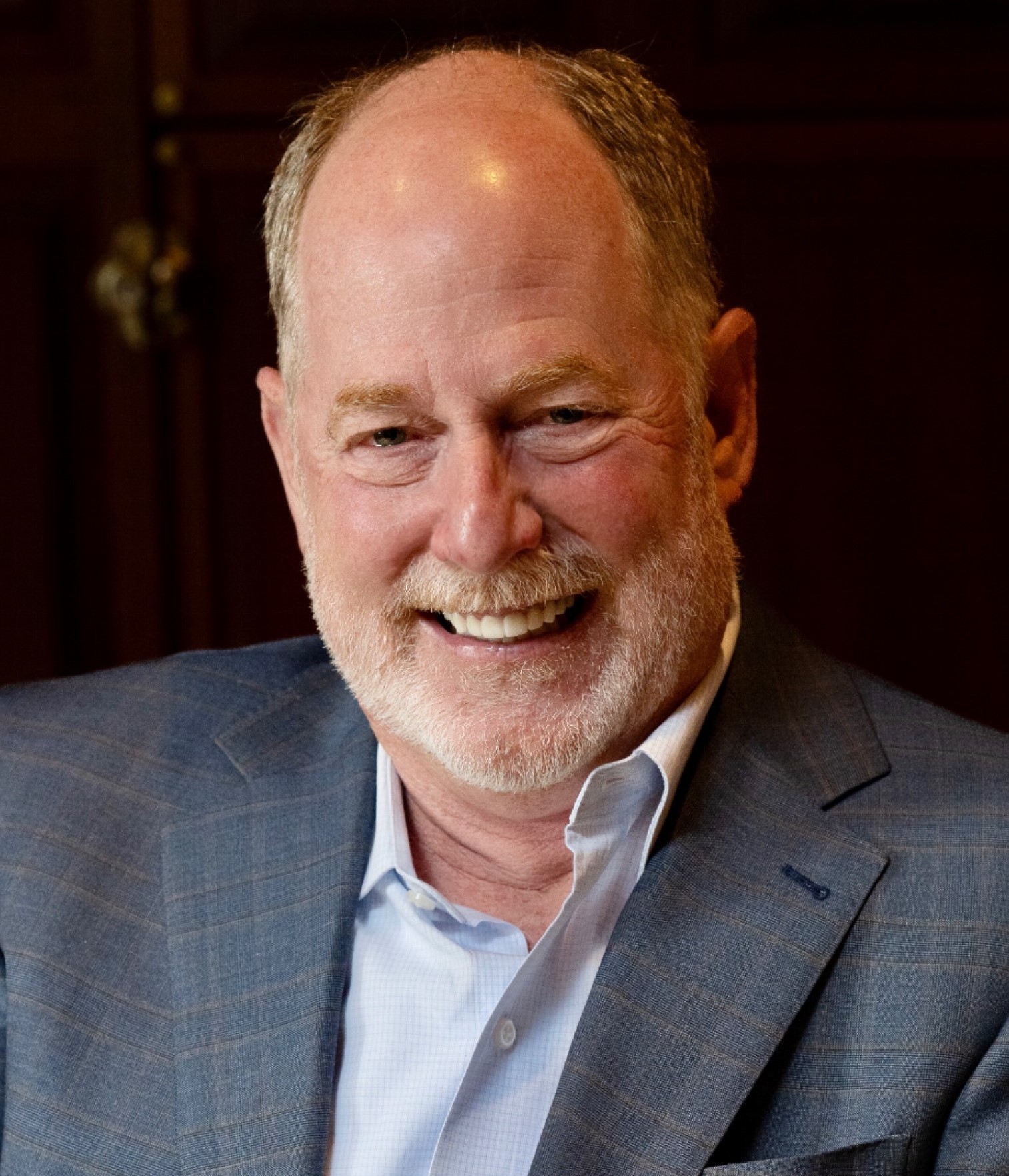
Matt Bryan
Making It Permanent (2024-2025)
But the victory came with a two-year sunset. The FTBOA returned to Tallahassee in 2024 and removed the expiration through HB 7073, making over $34 million in annual industry funding permanent.12
The 2025 legislative session tested FTBOA’s commitment to principle over politics. Even while leading the fight against decoupling, the FTBOA pushed for increased state investment. While others declared victory and left town, the FTBOA remained hard at work. The state directed $5 million to track-level Florida-bred incentives, while a stalwart Senate and ever-supportive Governor’s office added $2 million for breeding and industry promotion through FTBOA. Total annual state appropriations now reached about $37 million (including HISA credits) – the highest level in state history – flowing directly to Florida-bred purses and racing incentives.14
Tampa Bay Downs immediately put their increased funding to work: an additional $1 million in purse money for Florida-breds. Gulfstream Park has yet to announce similar plans. The budget also eliminated the $2 million annual slot machine licensing fee for Thoroughbred permitholders, conditioned on compliance with live racing requirements.14
We Defend It
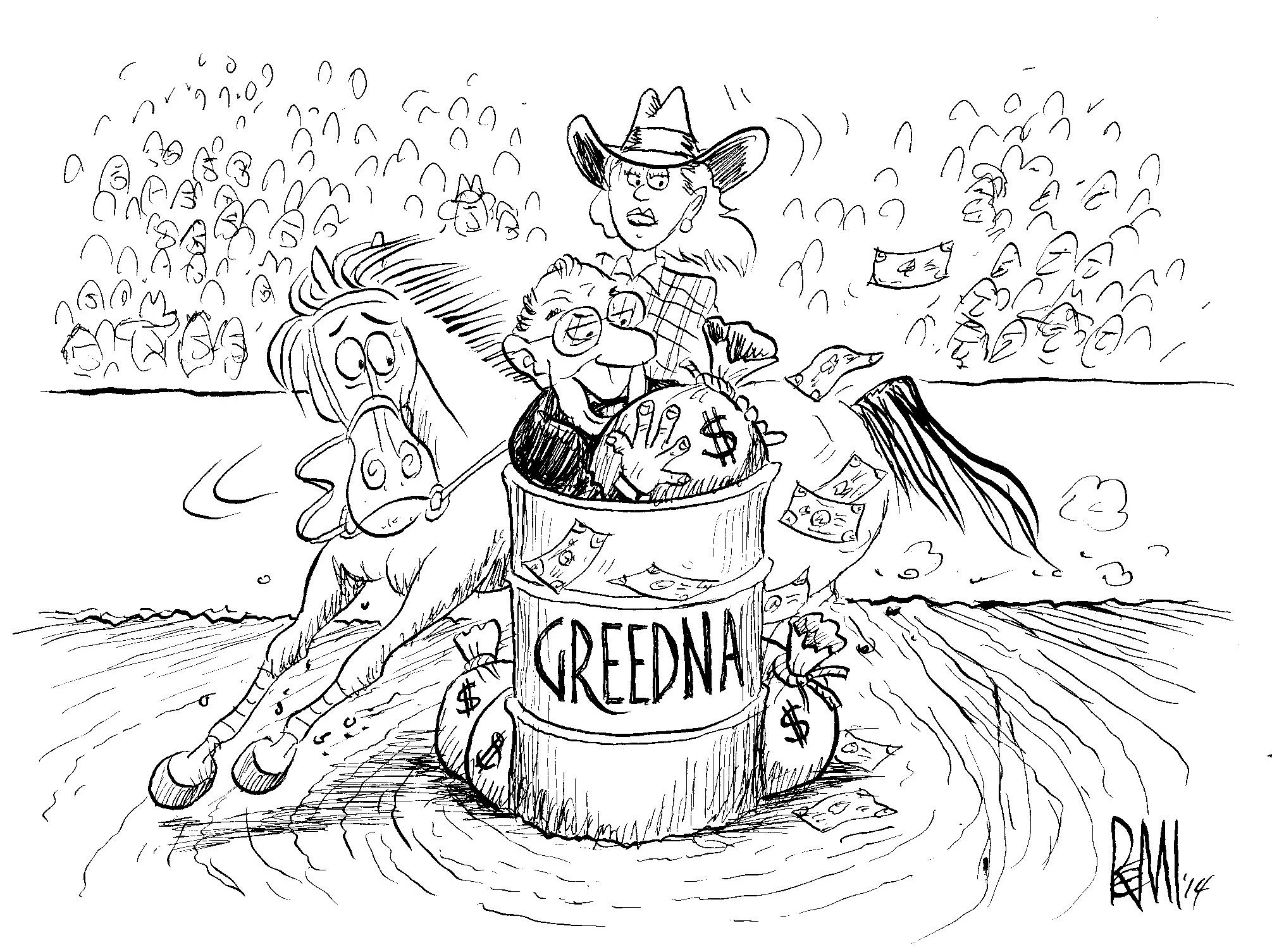
Greedna - ©Remi Bellocq
©Remi Bellocq
Defeated the “Barrel Racing” Loophole (2010’s)
In 2011, gaming operators attempted to gut Chapter 550 through fraudulent barrel racing permits. Gretna Racing, LLC partnered the Poarch Band of Creek Indians with Marc Dunbar, then a Gulfstream Park lobbyist; David Romanik, a former Gulfstream Park executive; and lobbyist Wallace McGee. They sought a Quarter Horse permit to conduct sham racing with minimal purses. The scheme would qualify them for year-round poker rooms and potential slot machines while making a “mockery” of the sport.15
The FTBOA led a coalition with the Florida Quarter Horse Racing Association and Florida Horsemen’s Benevolent and Protective Association (FHBPA), challenging the scheme through administrative and legal warfare. In 2013, an administrative judge ruled the Division of Pari-Mutuel Wagering violated Florida law by awarding the Gretna Racing license.16
Fresh from that victory, FTBOA engaged Oxford Downs starting in 2014, where operators used minimal Quarter Horse racing to qualify for poker operations. These battles honed FTBOA’s constant vigilance against operators who would reduce live racing to a cynical checkbox–a fighting spirit that would carry through the decoupling wars ahead.
Defeated the Coastal Connector (2018)
When the Florida Department of Transportation (FDOT) proposed the “Coastal Connector” toll road in 2018, every route carved through Marion County’s horse farm country–breeding and training centers that produced Triple Crown winners American Pharoah and Affirmed–threatening to fragment thousands of acres and challenge the region’s status as the rightfully trademarked Horse Capital of the World®.17,18
The FTBOA led the fight, building a coalition with Marion County horse farm owners and Agriculture Commissioner Adam Putnam.19 Marion and Citrus County Commissions passed resolutions demanding FDOT kill the project.17 In July 2018, FDOT Secretary Mike Dew, recognizing the economic stakes, committed to reworking routes to protect farmland. The Coastal Connector died.17,20 The bulldozers never rolled through horse country. Another existential threat defeated.
The fight yielded another legacy: Horse Farms Forever, a nonprofit dedicated to protecting Marion County’s farmland, emerged from the Coastal Connector battle with FTBOA as a founding member.21
Decoupling – A Lonely Defense (2005-2021)
From the moment slot machines arrived in 2005, the FTBOA consistently opposed decoupling initiatives. Others shifted positions. Others stayed silent. The FTBOA never wavered.
FTBOA CEO Lonny Powell recalls the evolving landscape:
“In 2012 [SB 1376], 2016 [HB 7109], and 2018 [SB 840], the Florida HBPA stood shoulder to shoulder with us against decoupling while the racetracks maintained a strategic silence. But by 2021 the Florida HBPA delegated their position to Gulfstream Park, who by then openly advocated for severing the racing-gaming connection.”6
That shift left FTBOA standing alone when Senate Bill 2A threatened to decouple every racing breed in Florida—but the association found support where it most mattered. “We had many legislative allies,” Powell said, “but the Thoroughbred exemption was especially championed by Wilton Simpson [then-President of the Senate, now Florida Commissioner of Agriculture]. We fought for that exemption not just for breeders, but for every horseman whose livelihood depends on live racing–including those who had gone silent.“6
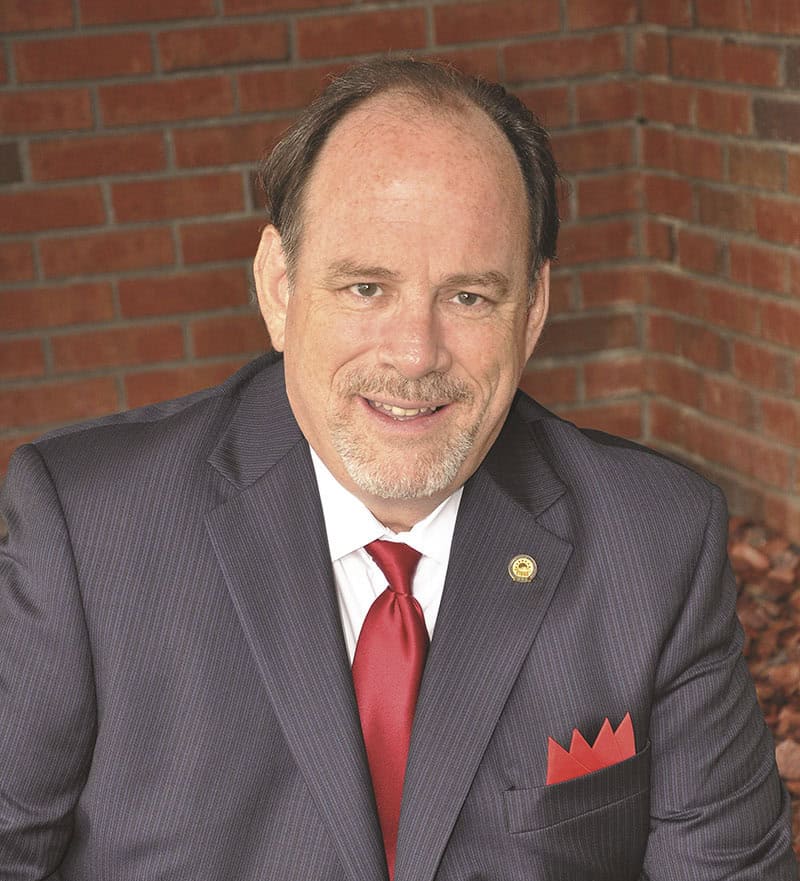
Lonny Powell, CEO of FTBOA and Ocala Thoroughbred Racing - ©Serita Hult
The Legislature enacted Senate Bill 2A, severing greyhound, Quarter Horse, harness racing, and jai alai from gaming operations.22 Every other racing breed lost protection. The FTBOA stood alone and won a Thoroughbred exemption, maintaining live racing requirements at Gulfstream Park and Tampa Bay Downs.23 Without this victory, Florida Thoroughbred racing would have followed Pompano Park and Hialeah Park into extinction.
Meanwhile, Calder Race Course (owned by Churchill Downs, Inc.) chased its own destructive path: bulldozing its grandstand and successfully switching from Thoroughbred racing to jai alai by 2019.24 A stark demonstration of exactly what FTBOA fought to prevent statewide.
Decoupling – Battle Joined (2024-2025)
On January 6, 2025, 1/ST Racing and the Florida HBPA announced support for House Bill 105 to decouple Gulfstream Park’s racing and gaming licenses.25 FTBOA CEO Lonny Powell immediately opposed:
“Our position has never changed on decoupling since it was defeated in 2021.”26
FTBOA faced unprecedented headwinds: 1/ST Racing, learning from each prior defeat, poured resources into cultivating House support, while unusually contentious House-Senate relations complicated traditional coalition-building. As anticipated, the House advanced HB 105 through committee and floor votes.27 The FTBOA’s strategy never relied on stopping the bill there. The true path ran through the Senate, where established legislative relationships positioned FTBOA to succeed.
Senate leadership killed the bill’s momentum.28 Governor Ron DeSantis, reflecting years of FTBOA collaboration with his administration, privately and publicly opposed decoupling.27 When the May 2, 2025 session ended, decoupling died without Senate passage.28 Another legislative victory for FTBOA’s proven track record.
But Gulfstream Park took an unprecedented next step. On August 5, 2025, they sued the Florida Gaming Control Commission, claiming their statutory obligation to conduct live racing was unconstitutional.29 Gulfstream’s litigation strategy: challenge the very regulatory framework that made their slot machine profits possible.
In October 2025, the Florida Gaming Control Commission filed a motion to dismiss the lawsuit, arguing that recent state appropriations–including $21 million for purses and the waived $2 million slot license fee–demonstrate a state interest in horse racing that entitles Florida to regulate the sport.30 The FHBPA also joined as a defendant intervenor against Gulfstream, seeking to protect racing and horsemen’s livelihoods.31
The FTBOA again stands on the legislative ramparts while Gulfstream attacks the State in court. The organization that built Florida’s protective coupling framework now defends it in yet another existential battle. When the legislature reconvenes in January, 2026, the FTBOA will be prepared to respond if Gulfstream’s lawsuit succeeds or if new legislative attempts emerge.
We Are Its Future
Building continues. Defense never stops.
Florida Statute 550, built for on-track wagering windows, fails Thoroughbred breeders in the smartphone era.32 The FTBOA-secured owner awards, appropriations, and higher breeder rates–stopgaps, not solutions.
Florida’s breeding industry produces foals. The bottleneck is ownership.33 Robust breeding requires robust racehorse ownership, and ownership requires statutory modernization that captures 21st-century revenues.
Decoupling threats will evolve. Legislative attempts will resurface. Court battles will continue. The FTBOA stands ready on every front.
And if Gulfstream Park flounders? The FTBOA and OTR will be ready. Activation will require sustainable economics and favorable legislation.7
The FTBOA built this legacy. The FTBOA defends it. The FTBOA is its future.
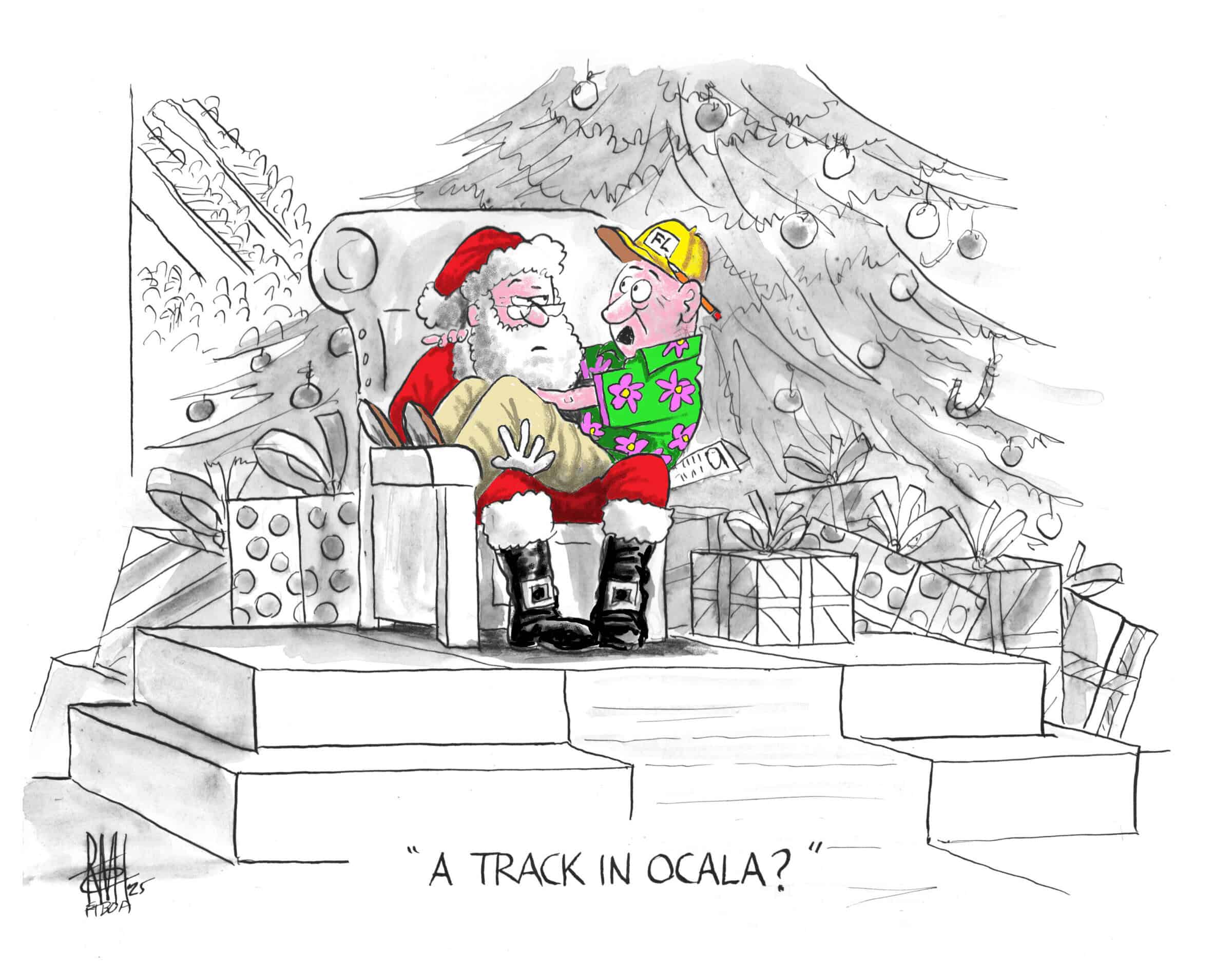
©Remi Bellocq
©Remi Bellocq
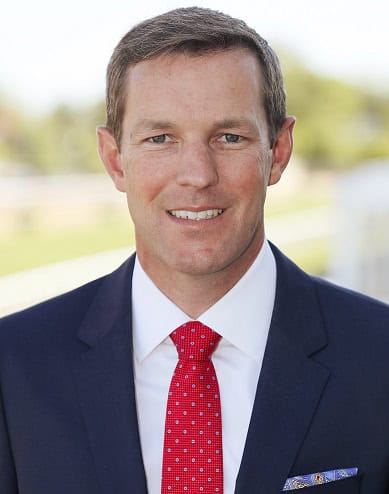
Steve Koch
Steve Koch is Administrative Vice President and industry economist for the Florida Thoroughbred Breeders’ and Owners’ Association.
Return to the December 11 issue of Wire to Wire