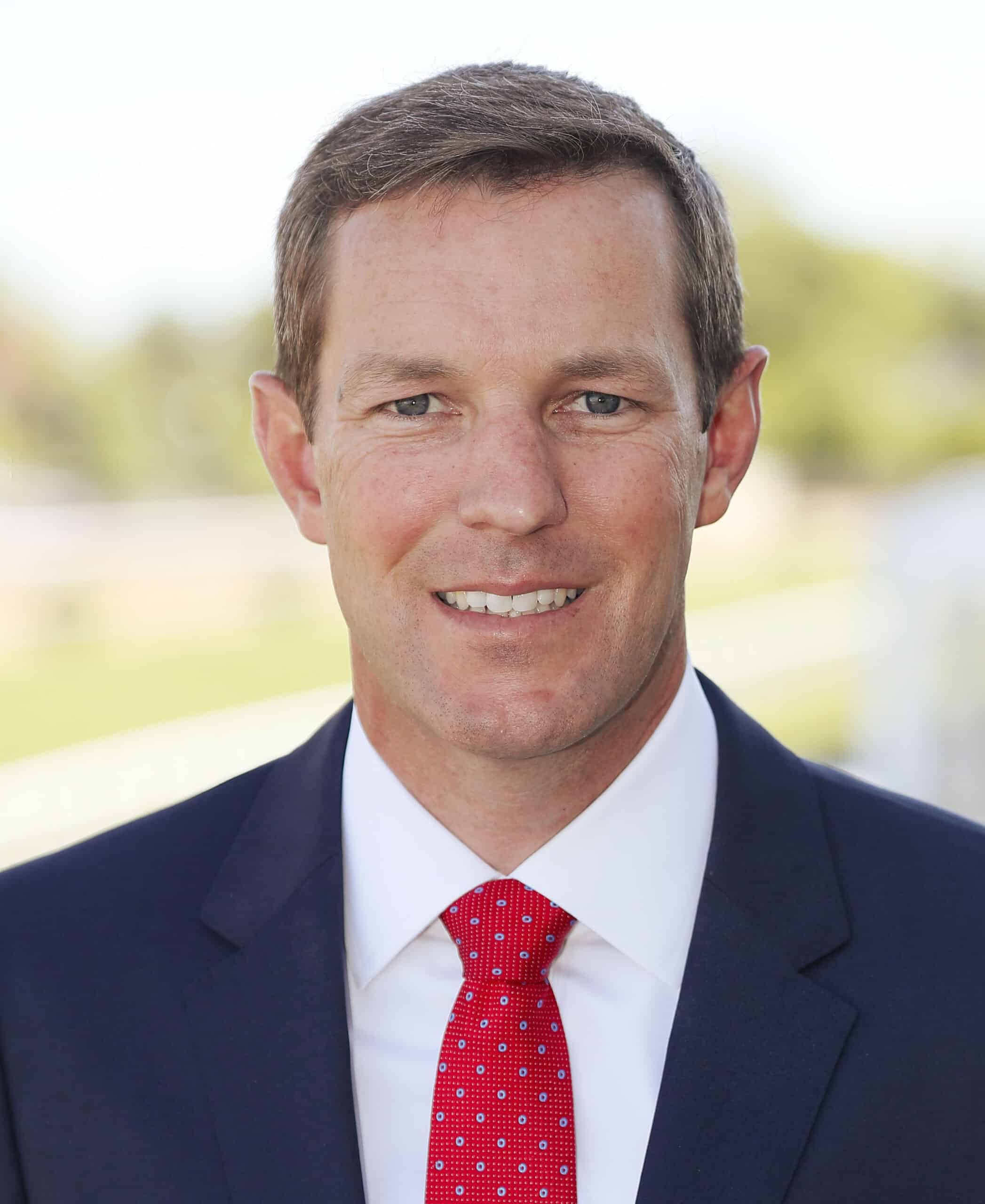
FTBOA Administrative Vice President Steve Koch
BY STEVE KOCH
FTBOA Administrative Vice President Steve Koch was invited to deliver the keynote address at the 30th Annual Organization of Racing Investigators Training Conference at Tampa Bay Downs on March 2, 2026. The following is adapted from his remarks.
I’m not a racing investigator. I’ve never carried a badge, never searched a shedrow. But I’ve been on the other side of almost every executive door a horse racing investigator knocks on. As an executive at Woodbine and 1/ST, as Executive Director of the NTRA Safety & Integrity Alliance, and now at FTBOA, every one of those stops taught me something about what integrity infrastructure is worth.
The data, it turns out, is remarkably clear.
At Woodbine, I pushed to implement the void claim rule. Leadership and the horsemen rejected it. Too disruptive. Too costly. Then California implemented it in 2013 under Dr. Rick Arthur, and the results were not ambiguous: a 75 percent reduction in claimed horses that never raced again, a 24 percent reduction in the odds of fatal injury at tracks with the strictest rules, and a landmark 2025 study covering nearly four million race starts that found the void claim rule was the single most protective variable against fatal musculoskeletal injury.
The industry said it couldn’t afford this rule. The data says the industry couldn’t afford to be without it.
That matters to breeders and owners directly. Every horse lost is someone’s investment, someone’s breeding decision, someone’s hope.
But the investment case goes beyond any single rule. The void claim rule worked because three things came together: the science to identify the problem, the data to prove the solution, and the people willing to push for it. That’s what a complete deterrence infrastructure looks like: laboratory, data, and workforce, three gears that have to mesh. When all three are turning, the system works. When any one stops, they all stop.
At the Safety & Integrity Alliance, we learned that the hard way. We had no enforcement authority. All carrot. No stick. So we operated as extension agents, showing up at tracks, building trust, pushing for better. Usually, progress happened without our name on it. That’s most often how this work goes, and the investigators in that room at Tampa Bay Downs know it as well as anyone.
And the stakes are higher than most of us realize. Social license to operate, the public’s permission for an industry to exist, is something most of us don’t think about until it’s too late. McKinsey found only 22 percent of the general public had a favorable impression of horse racing. Over 50 percent of casual fans said they would disengage if they knew horses were mistreated. The Jockey Club has reported 31 percent of likely voters said racehorses are not treated humanely.
Every investigation, every drug test, every piece of surveillance infrastructure is a deposit into the social license account. When the integrity infrastructure fails, the account gets emptied in real time. Santa Anita, 2018–2019: over 30 racehorses lost in a single season.
What does racing look like with no integrity infrastructure at all? You don’t have to imagine it. Over 120 bush tracks have been identified nationally across 28 states, including here in Florida. Unsanctioned, unregulated horse racing with no veterinarian, no drug testing, no oversight of any kind. That is the control group, none of the gears turning.
If you want to know what happens when the account reaches zero, look at Florida greyhound racing. Voted out of existence, 69 to 31. The greyhound industry thought their tradition was too entrenched. The public decided the animals weren’t being protected and acted. Not through regulation. Through a constitutional amendment.
From the breeders’ seat, the investigators are connective tissue most of us never see working. But we depend on it entirely. The next time someone asks “how much is that going to cost us?” about an investigator position or a training program, the answer should be: here’s what it costs when we don’t.
The keynote was titled “Broad Shoulders” because this entire industry rests on the broad shoulders of the people who protect it. Having sat in every other seat at the table, I meant it.
Expensive doesn’t mean expendable.
Return to the March 4 issue of Wire to Wire