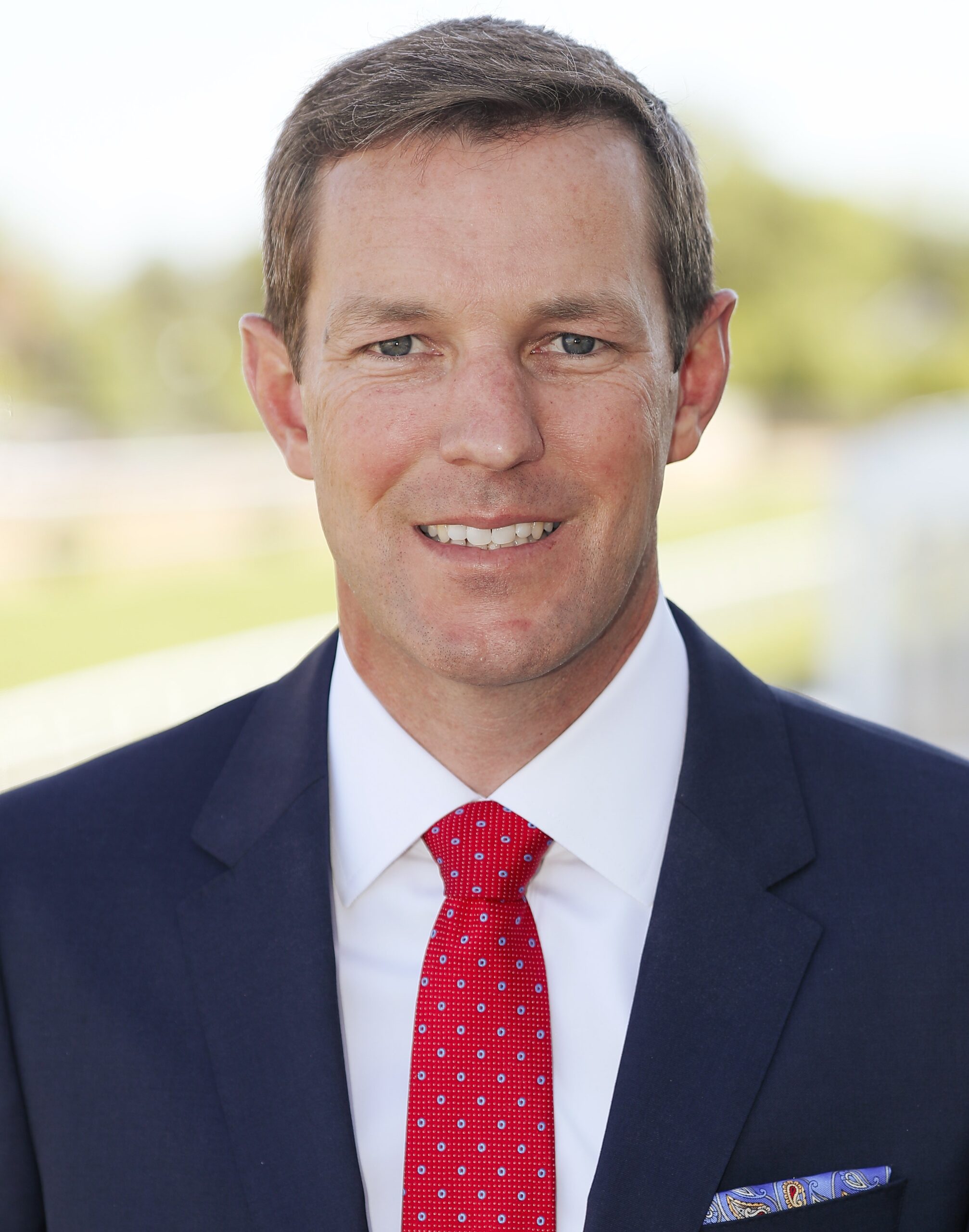
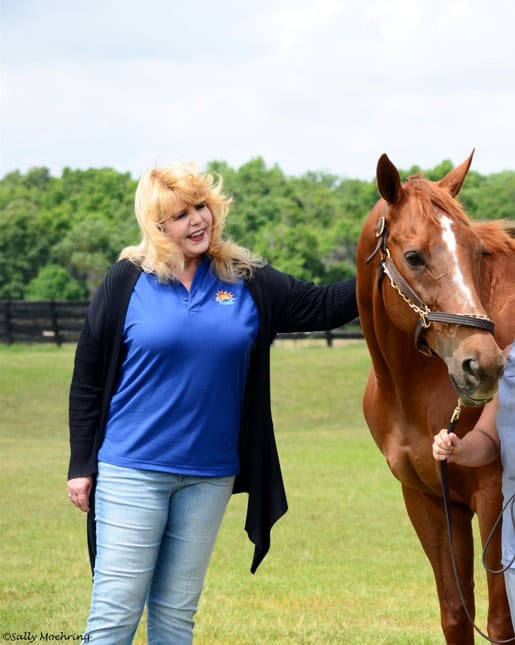
Diane Dolores Lajqi
March 27, 1960 – November 24, 2025
Born March 27, 1960, in Lexington, Ky, Diane passed away peacefully at HCA Memorial-Ocala after a major stroke a week prior. She had spent more than a decade in a health battle from the results of a previous stroke in which she learned to walk, read, and talk again. She was a heart attack survivor and cancer survivor.
Diane was on the forefront of many milestones in the Thoroughbred industry. She became a mutuel clerk at the Red Mile, among other Kentucky tracks, and progressed rapidly through the ranks becoming a supervisor and manager. Her work caught the eye of John Brunetti Sr., owner of Hialeah Park, who installed her as the ‘voice of Hialeah Park’. Bettors who called the track’s results line were greeted with her pleasant, sultry voice as she read results. She developed a cult following, receiving flowers and chocolates delivered to the track from admirers.
Hazy on its legality at the time, in the ‘80s she was assigned to take phone bets on occasion. She was instructed to cover up the map of the caller’s locations if anyone ‘official looking’ stopped by. This knowledge of the need for bettors to bet races from offsite or other states led to conversations that were already happening nationally regarding simulcasting thus thrusting Diane to the forefront.
By 1990, simulcast and intertrack wagering was authorized for all pari-mutuels. By this time, Diane was assistant mutuels manager at Calder Race Course. She and track management at the time worked with Florida Thoroughbred Breeders’ and Owners’ Association president Stanley Ersoff and CEO Dick Hancock along with the horsemen’s association to develop simulcasting opportunities for the track and create rules for the State of Florida. Diane’s firsthand knowledge was valuable and she tapped for recommendations and to craft legislation which resulted in numerous legislative successes throughout the decade.
In 1995, under Diane’s title of simulcasting coordinator, full card simulcasting was introduced at CRC on an experimental basis, while awaiting state approval. In 1996, full card simulcasting was approved by the state and CRC offered full card simulcasting on a limited basis. This led to Calder being the host track for simulcasting signals within the state for many years while running the live meet for eight months annually. Diane coordinated simulcasting signals and attended simulcasting conferences to leverage new technology to improve signal transmission, acquisition of new signals, coordinate big event racing calendars, and began early conversations on the importance of the staggering of post-times.
Diane rose through the ranks quickly once again after CRC’s purchase by Churchill Downs in April 1999 with simulcasting, mutuels and later cardroom management responsibilities. After Churchill Downs purchased CRC, she was promoted to negotiate simulcasting signal packages as a collective to leverage Churchill Downs’ high-volume, high-profile dates. She, alongside others, was part of a corporate committee designed with the goal of increasing market share. This led to innovations at the time to make the signals at CDI-owned racetracks standout, including the formation of the Churchill Downs Simulcasting Network (CDSN), branded standard graphics packages (Spires logo and CDI colors) so all signals were identifiable worldwide, the replacement of outdated TVs with state-of-the-art TVs, renovations to accommodate the largest TVs available and additional sets to show more signals, the movement to record races in hi-definition, demanding signals coming in be better quality, the addition of camera angles, inclusion of between succinct race handicappers, and the state approval and addition gimmick bets on special events days. She was promoted to a corporate level.
In 2002, she became assistant mutuels manager when Patrick Mahony left for NYRA, where she supervised a union shop of more than 100 clerks for the Calder and Tropical Park meets.
A state law change in 2003 allowing the pot limit to increase from $10 to $100 led to CRC opening its first poker room. Diane implemented a quick launch overseeing promotions, staff hiring and development, suite design and VIP operations.
During her tenure, CRC launched the nationally recognized Summit of Speed, Juvenile Showcase and Extreme Day, which included the World’s Fastest Daily Double – two races run simultaneously on the dirt and turf courses – giving Diane a mutuels challenge. In 2010, she worked closely with the Latin American Racing Channel (LARC) to ensure Calder was among the early adopters for international racing on the live racing card. She later worked in management at a Central Florida dog track and the FTBOA, prior to going into consulting for Latin American racing markets.
A tall, blonde knockout with mischievous blue eyes, Diane’s life was colorful having been married five times and on her way to a sixth marriage. She carried a charisma that can only be described by the French as ‘je ne sais quoi’, which very well may have come from her French descent. She married at an early age to get out of the house and to live her dream as a Holiday Inn lounge singer. Diane was a published songwriter, poet, and author of non-fiction fantasy. She spoke four languages: English, Spanish, Portuguese and Albanian. She enjoyed spending time with friends at a bar, at a pool or in an exotic location. She was preceded in death by her parents and only sister. In lieu of flowers or donations, her wishes were to raise a glass (preferably Jim Beam) in her honor. Her ashes were spread over the Gulf.
Return to the December 12 issue of Wire to Wire