BY STEVE KOCH
More than 100 wildfires are burning across Florida. Nearly 80 percent of the state is in extreme drought. Dense smoke is drifting into Marion County.
Thoroughbreds move enormous volumes of air at speed. Kentucky Equine Research reports that smoke particulates may bypass the upper airway and settle deep in the lungs, damaging tissue and compromising performance. The UC Davis Center for Equine Health puts recovery from acute smoke inhalation at four to six weeks, with a two-week minimum. Horses with respiratory history face the greatest risk.
Monitor local air quality daily. The Horseracing Integrity and Safety Authority (HISA) endorses the U.S. Environmental Protection Agency’s Air Quality Index, published at airnow.gov, as the working reference. Click here for Ocala-area readings.
HISA’s Air Quality Index Protocol sets these competition thresholds:
- AQI 100–150: Monitor conditions daily.
- AQI 150–174: Consider limiting work to jogs and gallops.
- AQI 175 and above: Restrict strenuous work. Walk or trot only for welfare.
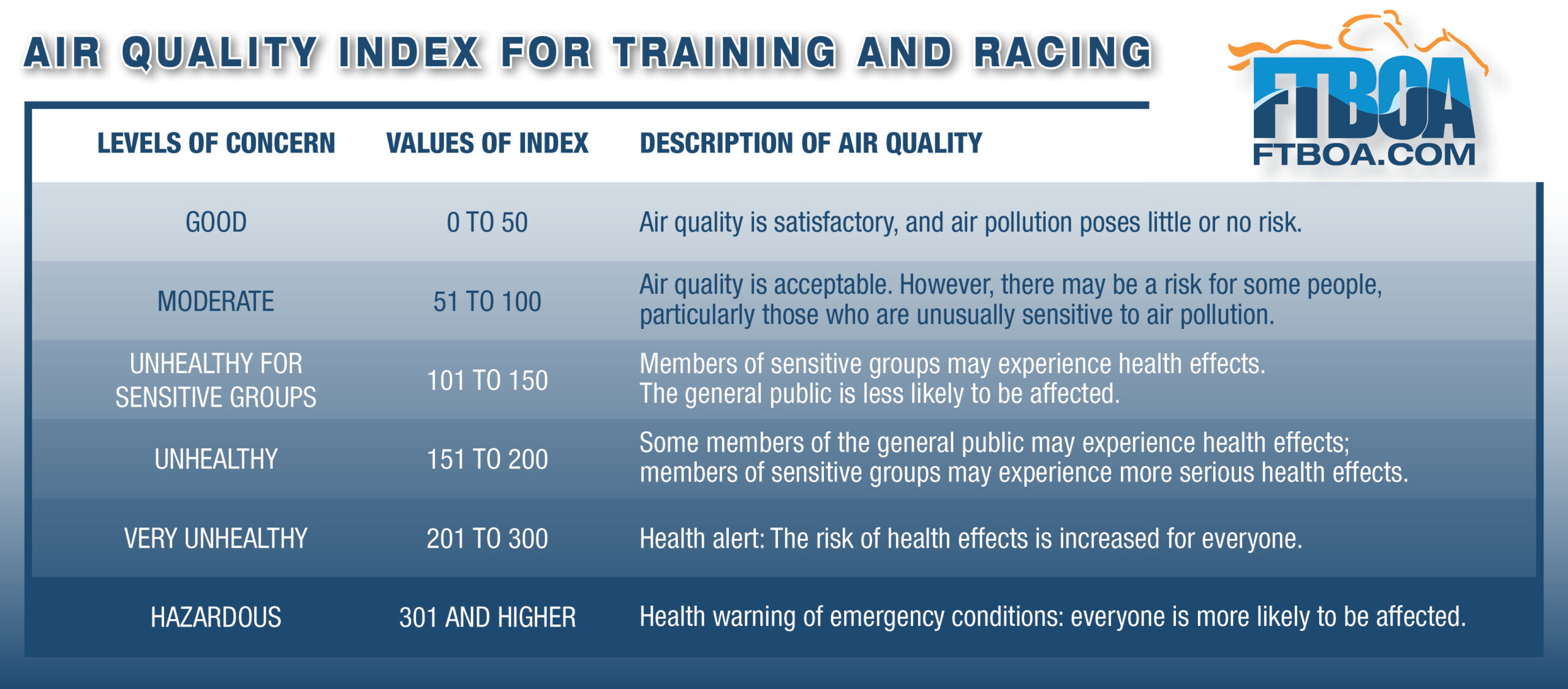
Click chart to enlarge, or click the links to view as Downloadable PDF • JPG
Watch for coughing, nasal discharge, or slow recovery after exercise. Consult your veterinarian when in doubt.
Wind direction can shift in hours. Check AQI before you send horses to the track, not after.
Return to the April 23 issue of Wire to Wire