Arizona RTIP senior promotes untapped video game fan base
BY STEVE KOCH
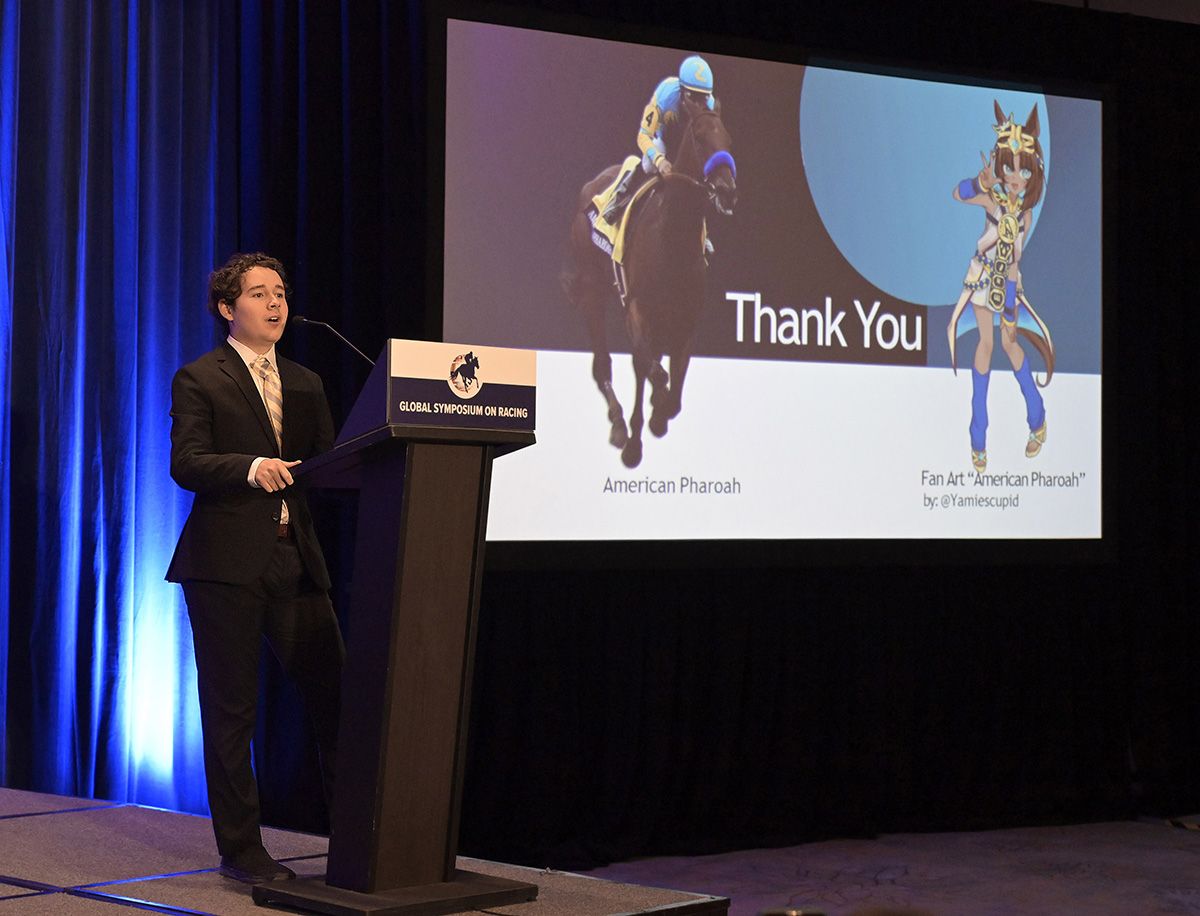
 TUCSON, AZ — A University of Arizona Race Track Industry Program senior presented research Tuesday suggesting the Thoroughbred industry may be overlooking a significant pool of potential new fans: players of horse racing video games, particularly a popular Japanese title that reimagines racehorses as anime characters.
Nathan Klein delivered his capstone project at the Global Symposium on Racing, sharing results from a survey of 1,241 video game players across three horse racing games. The findings point to substantial interest in attending live racing among demographics the industry has struggled to reach.
Klein examined three games: Rival Stars Horse Racing, Photo Finish Live (a blockchain-based game offering real-money breeding and trading), and Umamusume: Pretty Derby, a Japanese game in which historical racehorses are depicted as humanized female characters that players train and race.
The Umamusume respondents proved particularly noteworthy. Despite having the lowest prior knowledge of actual horse racing at just 15 percent, they expressed strong interest in physically attending races. The game’s player base skewed young and female, two demographics the racing industry has long sought to attract. Forty-three percent were between 18 and 25 years old, with nearly 90 percent under 35.
Klein pointed to organic, fan-driven activity already occurring. In October, approximately 300 Umamusume fans gathered at Santa Anita Park in Arcadia, Calif., an event organized entirely through social media with no track involvement or expenditure. Attendees arrived in cosplay, a historically unlikely crossover with the traditional racetrack customer base, carrying stuffed animals and original artwork. Another fan-organized meetup at Turf Paradise in Phoenix, Ariz., is scheduled for December, while fans in New Jersey are gauging interest in a photo shoot at the Meadowlands.
“These fans have shown enthusiasm for a sport that previously most of them had never even heard of, dressing up in full costume at a racetrack,” Klein said. “They’ve done their part. Now it’s our turn to welcome them with open arms.”
His recommendations included themed events, cosplay-friendly race days, costume contests, marketing that emphasizes horse personalities rather than wagering alone, and limited-edition merchandise. He noted the conceptual overlap between existing racetrack dress contests and cosplay competitions.
Klein closed with a direct assessment: “Is American Pharoah in a mini skirt going to solve all of our problems? No, but it’s a great start.”
Return to the December 10 issue of Wire to Wire