COURTESY UF/IFAS EXTENSION OFFICE
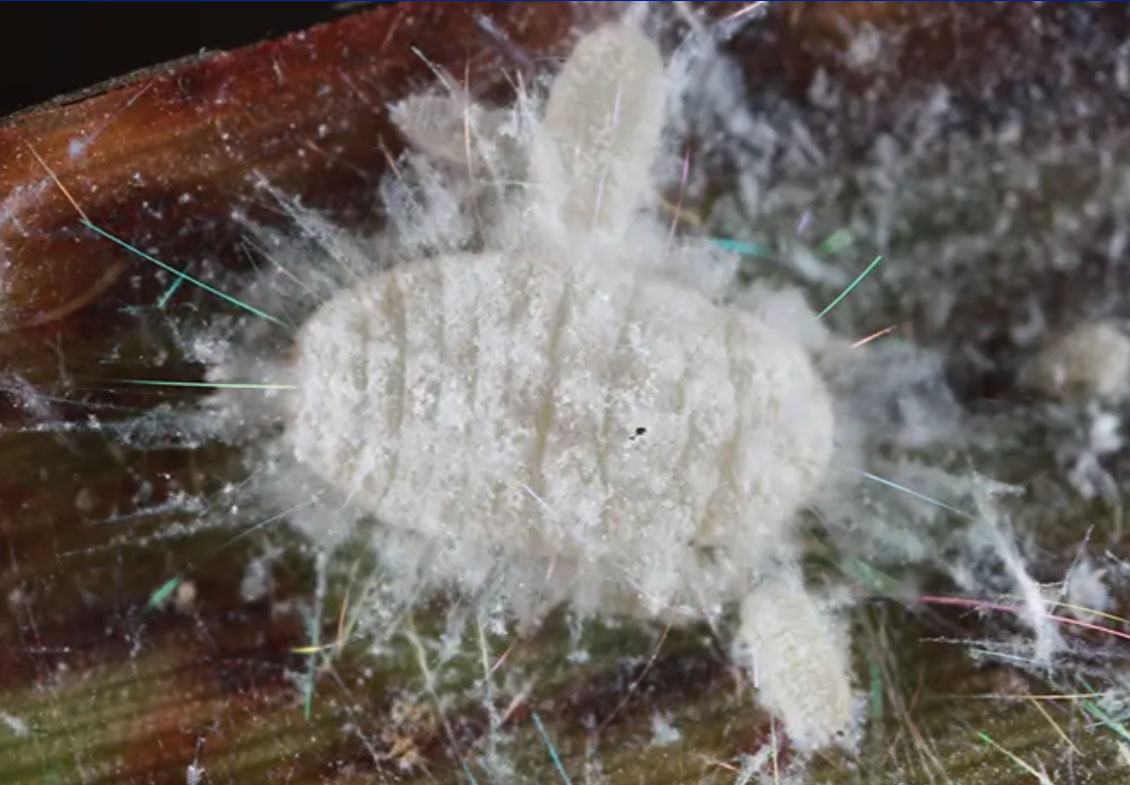
Pasture mealybug is an insect that feeds on multiple grasses- including our pastures, in turn damaging forages and causing severe die back and overall stand losses in many Florida pastures.
PMB is spreading through the state of Florida, and we are asking you to keep an eye on your pastures and look for unusual signs of distress in your pastures such as yellowing that progresses to red or purple grass blades, plants that look drought stressed after rain, and overall stunting of the grass or die back.
If you suspect you have pasture mealybug please contact your local UF/IFAS Extension office.
Resources:
- Pasture Mealybug – Florida Department of Agriculture & Consumer Services
- Publications – Pasture Mealybugs – University of Florida, Institute of Food and Agricultural Sciences – UF/IFAS
UF/IFAS Extension Marion County is a cooperation between the Marion County Board of County Commissioners and the University of Florida to deliver relevant, research-based education programs that result in healthy people, healthy environments and healthy economies.
Pasture Mealybug: Standard Cleaning Protocol for Equipment
Prepared by UF/IFAS Extension Pasture Mealybug Task Force
Pasture mealybugs can be spread between pastures, crop fields, roadsides and rights-of-way on mowing equipment, tractors, trailers, tools, clothing and plant debris. While no cleaning method guarantees complete removal of all mealybugs, a few simple steps can significantly reduce the risk of spreading them to new areas.
A Simple 3-Step Process for Cleanup
Step 1: Remove Debris Before Leaving the Site:
- Use a blower, air compressor or brush.
- Remove plant residue, soil and vegetation wrapped around moving parts.
- Pay attention to mower decks, belt and gear guards, undercarriages, wheel wells, tires and trailer ramps.
Step 2: Inspect High-Risk Areas:
- Check protected areas like crevices, undersides of equipment, toolboxes, storage compartments and clothing.
Step 3: Use Additional Cleaning, When Practical:
- Spray equipment with a soap solution or 70% isopropyl alcohol.
- Alcohol is best suited for spot treatment of tools, boots and small equipment surfaces, but since it is flammable, avoid spraying near hot engines, exhaust systems, sparks or open flames.
- Where facilities are available, washing can remove additional debris and insects lodged into hard-to-reach areas.
- Pressure washing may provide more thorough cleaning.
Return to the September 2 issue of Wire to Wire