
BY GLENYE CAIN OAKFORD
F
ive years ago, when Isaiah Webb took over as general manager of Florida Coast Equipment’s Ocala Kubota dealership, he knew relatively little about the area’s Thoroughbred industry, though he already had some knowledge of the sport-horse business through FCE’s founding sponsorship with the World Equestrian Center.
“I’m just a dumb tractor salesman from Lecanto, Florida, just 40 miles southwest of here,” Webb quipped. But it didn’t take him long to see that there was even more to Ocala than show jumpers, dressage horses, and show ponies.
“As I started to immerse myself more in the equine world, I noticed that there was only one side that we were catering to,” Webb recalled. “It got my wheel spinning—there’s so much more to the horse world. And that’s when the itch came from the Thoroughbred side of the fence.”
When one of his sales representatives brought him to an Ocala Breeders’ Sales Company auction, Webb immediately spotted an opportunity to expand FCE’s footprint beyond equestrian facilities.
Standing amid the bustle of one of the world’s premiere Thoroughbred marketplaces, Webb found himself paying less attention to the horses moving through the sales ring and the prices they brought, than to the vast operation—or, as he later put it, “the ecosystem”—surrounding them.
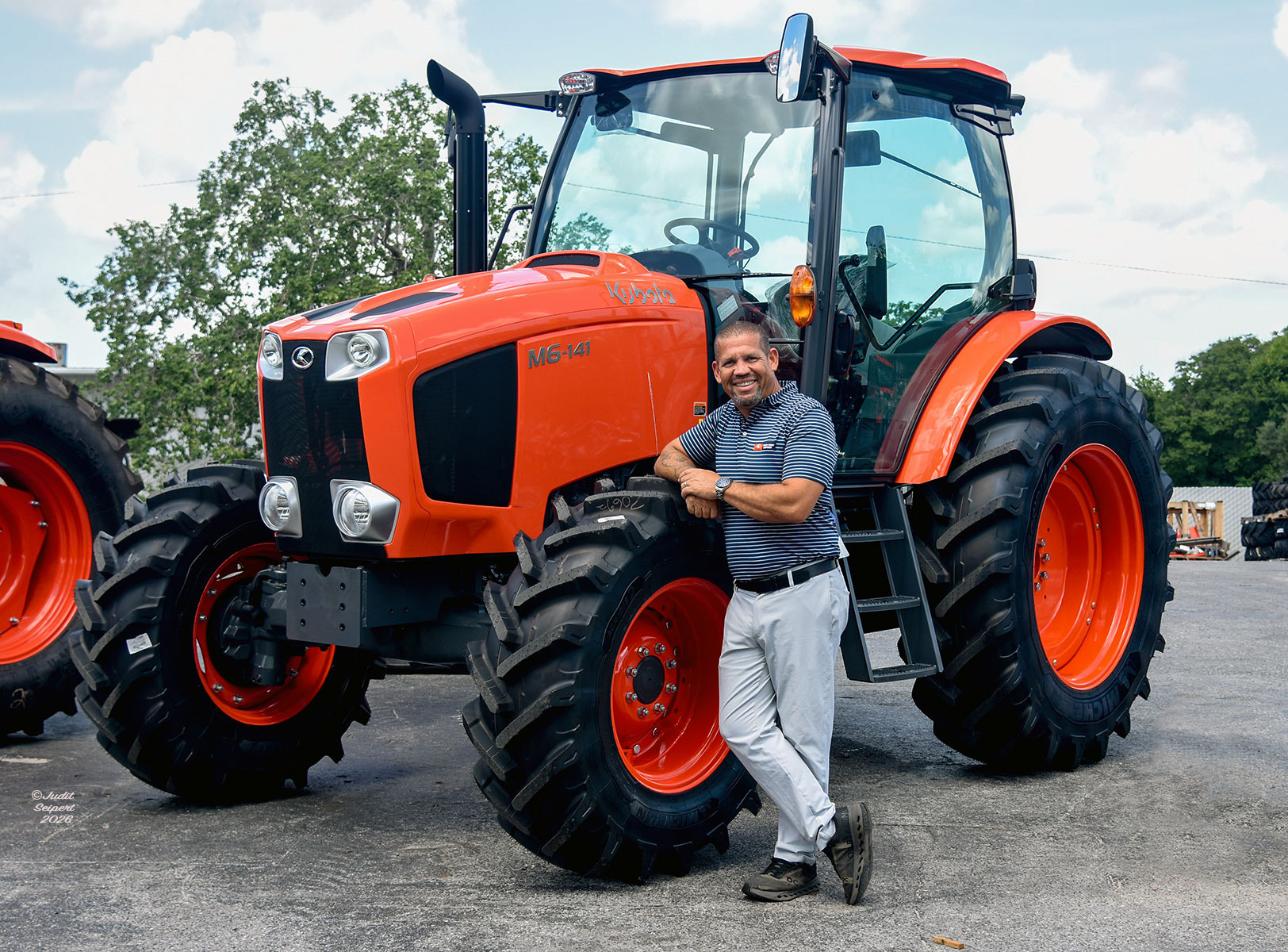
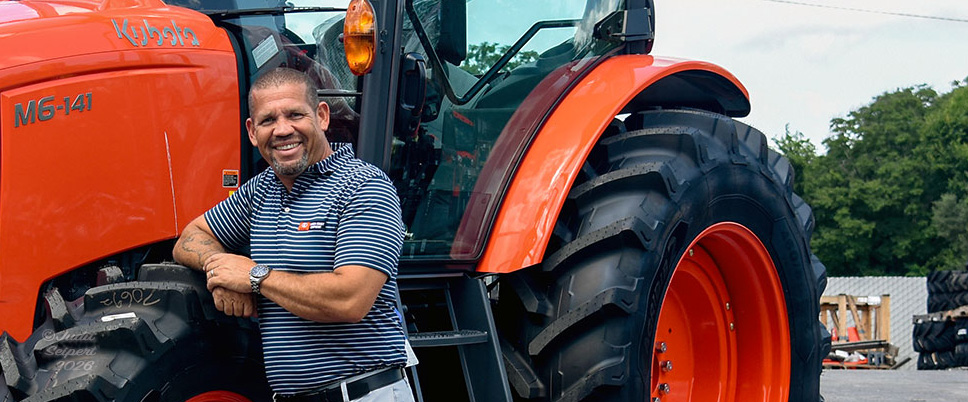
Isaiah Webb, General Manager of FCE Ocala - ©Judit Seipert
“I wasn’t necessarily paying attention to the dollars spent on the horses,” said Webb. “I was paying more attention to the stalls and the barns and the amount of people and how real of an ecosystem it truly was.
“I just saw it from a different lens,” Webb said. “I was looking at it from, like, I can support these people. I can help. I thought, could probably put 100 Kubotas here, and still not scratch the surface.”
Since then, Webb has become a familiar face in Central Florida’s Thoroughbred community and among members of the Florida Thoroughbred Breeders’ and Owners’ Association. But what resonates with FCE’s Thoroughbred industry clients is not simply the equipment itself, it’s Webb’s understanding of how Thoroughbred farms operate day to day, his commitment to service—and his belief that the right equipment, service, and support can help those operations run efficiently and sustainably.
I have never met more honest and genuine folks than I have in the equine space…Their principles and morals and integrity are the same as mine. It was a natural, easy alignment. Isaiah Webb
Webb, who grew up in Inverness, Florida, still considers the equine business “a whole new world to me,” he said. “But, I love it. The people are the best I’ve ever met in my entire life. I have never met more honest and genuine folks than I have in the equine space. The two worlds are so similar, but yet so different, between the show jumpers and the Thoroughbreds. But they all look out for each other, and that’s what drew me in. Their principles and morals and integrity are the same as mine. It was a natural, easy alignment.”
As he describes it, his growing affection for the sport of kings is rooted in what he sees from his vantage point next to a Kubota tractor, talking ground-level business about mowing acres of pasture, moving storm debris off a road, or lifting a load of hay bales.
“I believe the Thoroughbred people are more in line with the blue-collar man—they’re more of your everyday, in-the-trenches people,” he said. “They’re the owners and the breeders and the trainers that I’ve dealt with. They’re not standoffish. They’re in the stalls every day. They’re not the people who pay people to do things; they do them for themselves. That’s what I find most fascinating about the Thoroughbred world, is how actively involved and how much everybody truly cares about the animal.
“They care about their staff, they care about their animals, they care about their facilities, they care about their people.”
EFFICIENCY MATTERS
The demands of the equine business and Florida’s climate require quality, durable, reliable farm equipment for everything from mucking out to mowing. There’s never enough manpower or time, and efficiency matters. That efficiency, Webb says, is what he and Kubota offer.
“I’ve seen a lot of manual labor going on, and the purpose of equipment is to offset manual labor, speed things up, keep things neat and tidy,” Webb said. “I just saw that, in so many different ways, a Kubota could have been inserted there, moving the hay and mucking the stalls, just keeping day-to-day functionality.”
The biggest opportunities that I’m learning about right now is really the best practice maintenance of the tracks. Safety will always be of the utmost importance. Isaiah Webb
On farm visits, Webb is quick to pick up on opportunities where equipment effectively can serve as a farm’s force multiplier. He also sees opportunity in new knowledge about how to do things better. He points to an emphasis on racetrack maintenance, thanks in part to the federal regulations driven by the Horseracing Integrity and Safety Act, as an example.
“The biggest opportunities that I’m learning about right now is really the best practice maintenance of the tracks,” he said. “Safety will always be of the utmost importance. And I do believe that that’s partly on the manufacturers, and the Kubota dealers like me, and the people selling the equipment to the people maintaining those tracks.
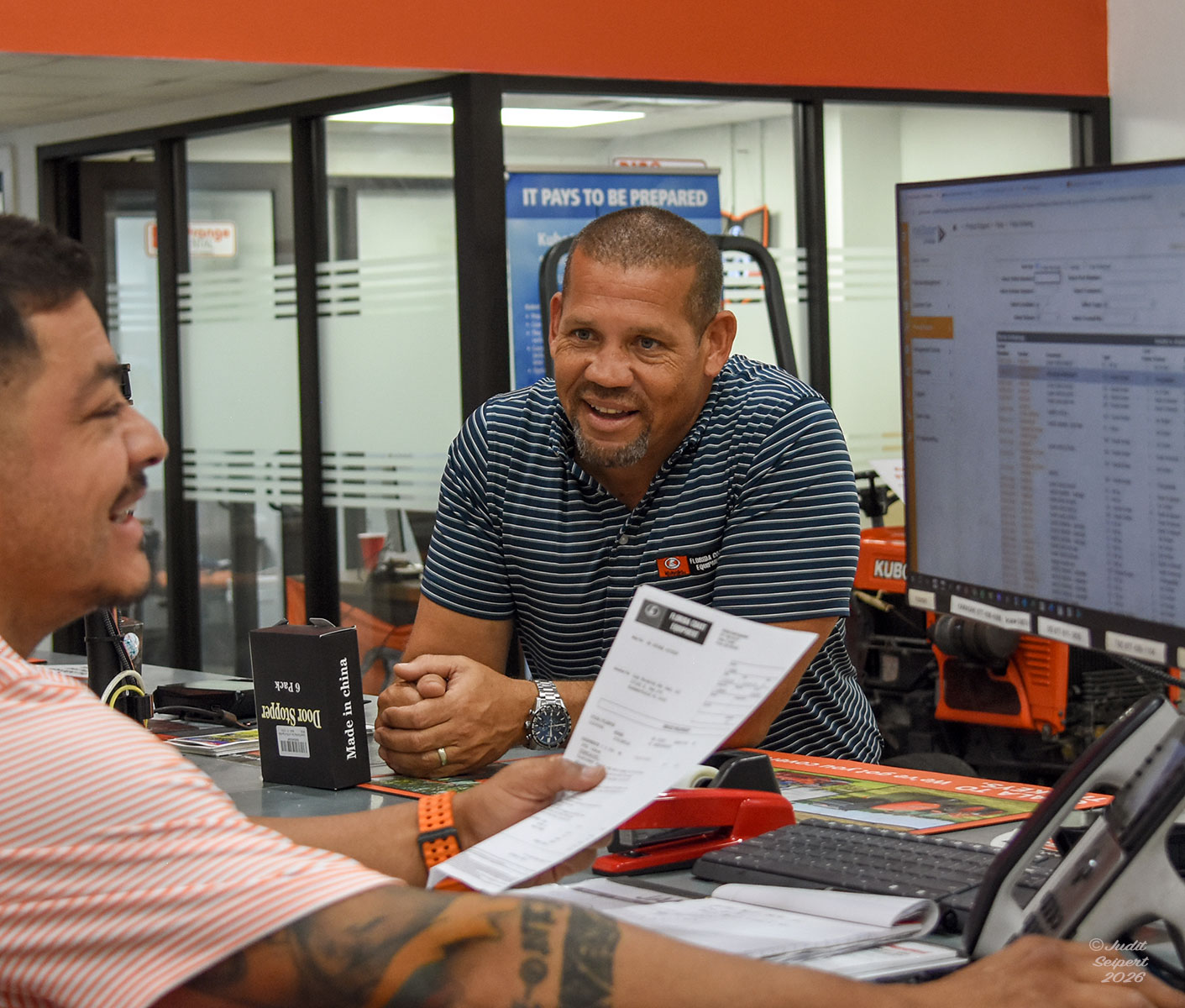
Isaiah Webb - ©Judit Seipert
“For me, it starts with the education of the guy maintaining the track itself. He needs to understand my equipment, to understand how to pull the other person’s equipment, to understand how to maintain, ultimately, his track and his training facility. The end game is safety and consistency, all the way across the board. Everybody needs to understand from start to finish what this looks like.
As part of his own education, Webb spent several days visiting and working with a racetrack maintenance crew to learn more about the care of the footing that Thoroughbreds train and race over throughout their careers. What works, what doesn’t, and how can Kubota equipment help are his top-of-mind priorities, he says, whether he’s talking to a track superintendent or a farm manager.
“Every time I go out on the farm, the first thing I want to look at is, what are they doing to maintain their track and their facilities, and are they using what we offer efficiently?” explained. Webb, who typically visits facilities with his service manager or one of his four Kubota-certified master technicians. “If they’re not using equipment appropriately, then we can assist.”
Caring for and running Kubota farm equipment, Webb jokingly acknowledges, does have some similarities to caring for a Thoroughbred. One of the earliest lessons he recalls about the care and feeding of tractors actually did come from the owner of a veterinary clinic, he noted. “I was taught by Jack Ford, our previous owner, who was a veterinarian by trade,” he explained. “He told me, ‘Isaiah, if you take care of the little things, the big things don’t happen.’ He couldn’t have said a more true statement in the equipment world. It’s easy to overlook the simple things that cause catastrophic failures. You’ve got to slow down to speed up, especially in the Thoroughbred and the equipment worlds.”
The Kubota is, in fact, a work horse. Part of Webb’s education process for his customers is to remind FCE customers that their Kubota equipment is robust, and it’s important that they use that power appropriately.
INVEST WISELY
Buying a piece of farm equipment is a big investment for his customers, and he says he believes his role is about helping them invest wisely, based on their operation’s needs.
As the Ocala area’s equine community grows, he says he’s having more planning conversations like one he had with a new farm owner planning an equestrian operation.
“She started with 75 acres of nothing, a blank canvas,” he explained. “Over the last eight to 12 months, we helped her purchase the right equipment, spending appropriately, not frivolously. We got it done for [under budget] and she was able to invest more in horses, in farriers, and the day-to-day life of a horse farm.”
His advice for others considering equipment: clarify must-have versus nice-to-have.
Ultimately, the end game is to provide a superior product to everybody, and that goes from the equipment down to the surfaces to the Thoroughbreds themselves, because we’re all aligned in this venture together. Isaiah Webb
“What do you actually need to maintain the property?” he asked. “If you need it, it’s a must-have. If you want it, let’s debate about it. If you’ve bought a 25-acre property in Marion County, you might think you want a 100-horsepower tractor, a 15-foot batwing, a box blade and a rotary cutter. But 25 acres is not that big of a plot, so let’s scale the tractor back; you need about 75 horsepower. Depending on the type of grass and where you’re actually cutting, you might not need both a finish mower and a batwing.
“I advise people to put it all on paper, what you think you absolutely need. Then, in a separate column, put what you want. I try to take the needs and bring them into reality, then take the wants, push them out the back door, and show them how to utilize their tractor to its maximum capacity to get the most bang for their buck.”
Beth Bayer of Fogg Road Farm appreciates FCE’s on-farm services like changing her tractor’s oil and making sure her mower blades are sharpened. “They represent really high-quality equipment, and they go above and beyond to personalize their service,” she said.
Bayer says she also was glad for the thoughtful analysis Webb and his team made of her operation before she purchased her Kubota—even though she ended up buying a bit more than she initially thought she needed.
“My tractor has a bucket on the front, which I didn’t think I really needed,” she said. “But after talking through what we do at the farm, we all felt that having a bucket actually would be efficient to have, and it worked out really nicely. We’ve used it for many different things that we didn’t realize we needed it for. In the past, we got by, but now it’s an example of having the right equipment at the right time. It helps us trim trees. We can move shavings, we can go to the front of the farm and fill the bucket up with wood and take it to the burn pile. It’s definitely made our work much more efficient.
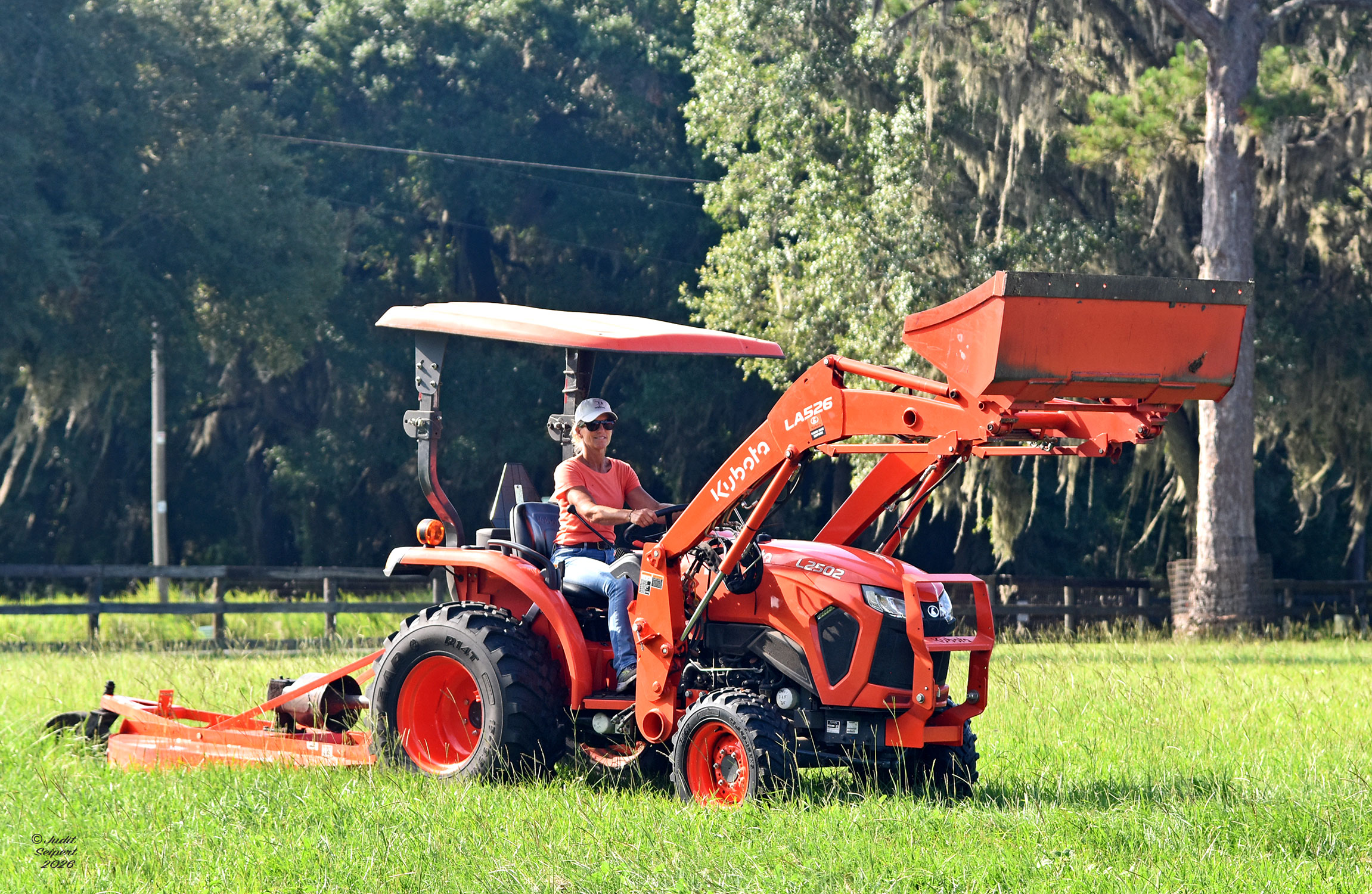
FTBOA Director Beth Bayer - ©Judit Seipert
“At the end of the day, it didn’t end up costing that much more, for all the time it’s saving and all the things it can do,” she added. “The guy who has worked for me for 25 years would always say, ‘If we had a bucket, I could do this,’ So we decided to surprise him with it, and they helped me with that, too, which made it more fun.’”
Since Webb took that trip to OBS, what he initially saw as a business opportunity has evolved into something much more personal. He now finds himself researching Thoroughbred bloodlines, following racing, and spending time at Gulfstream Park with his family. “I’m starting to really just immerse myself in the world, not because of what’s going on, because I do actually enjoy it,” Webb said.
“I believe this is the beginning of something very, very long and beautiful together,” Webb said of FCE’s partnership with the Florida Thoroughbred Breeders’ and Owners’ Association. What it comes down to, he feels, is a shared commitment, starting right from the ground, from the racing surface and the farmland up.
“Ultimately, the end game is to provide a superior product to everybody, and that goes from the equipment down to the surfaces to the Thoroughbreds themselves, because we’re all aligned in this venture together,” he said.