


SEPTEMBER 2026
BY STEVE KOCH
This is the latest in a continuing series tracking how Florida’s new state investment in Florida-bred purses translates into actual earnings.
The State Investment
The Florida Legislature moved $5 million into racetrack purses for Florida-bred racehorses in 2026 – $4 million to Gulfstream Park and $1 million to Tampa Bay Downs. After accounting for preexisting allocations and reserves, the net new investment is $4.8 million at Gulfstream Park and $536,000 at Tampa Bay Downs. FTBOA is tracking how this investment translates into additional earnings for Florida-breds.
How We Track It
We start with what Florida-breds earned at each track before the new state money arrived. That’s the baseline. Adding the new state allocation to the baseline provides an adjusted 2026 Florida-bred earnings budget that we’ll refer to as “expected earnings”. Because earnings don’t accumulate evenly through the year – some months have more racing, richer stakes, or different field compositions – we proportion the expected trajectory to match the historical pattern rather than assuming a straight line.
At Gulfstream Park, the adjusted 2025 baseline is $28.8 million. Adding the $4.8 million net new state allocation brings 2026 expected Florida-bred earnings to $33.6 million. The baseline is adjusted to remove Q1 Wednesday race dates and six Florida Sire Stakes races, both discontinued in 2026.
Gulfstream Park: Earnings vs. Expectations
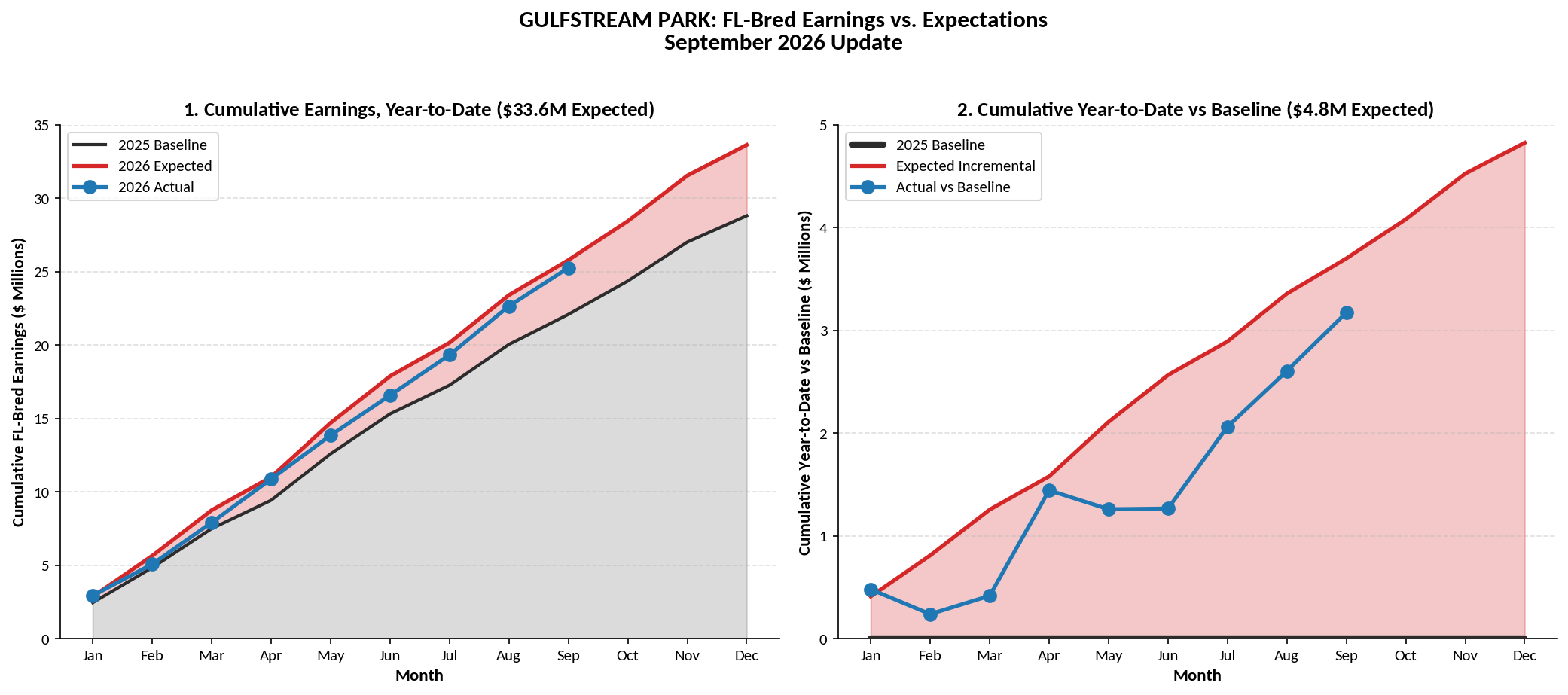
Through September, Florida-breds at Gulfstream Park have accumulated $25.2 million total purse earnings – $3.2 million ahead of baseline, and $527,000 shy of the maximum expected earnings. The gap to maximum expectations has narrowed every month since June, when it stood at $1.3 million. A margin of $527,000 seems consistent with normal contingency planning.
Panel one shows cumulative Florida-bred earnings building through the year against the 2025 baseline and the state-enhanced expectation. Panel two, labeled “Cumulative Year-to-Date vs Baseline,” is the key graphic. Red represents expected incremental earnings from the state allocation, proportioned across the year. The blue line exhibits how far actual Florida-bred earnings have risen above the prior-period baseline, a gap that widens or narrows depending on monthly performance. Where the blue line tracks the red area, the new state investment has translated to additional Florida-bred earnings.
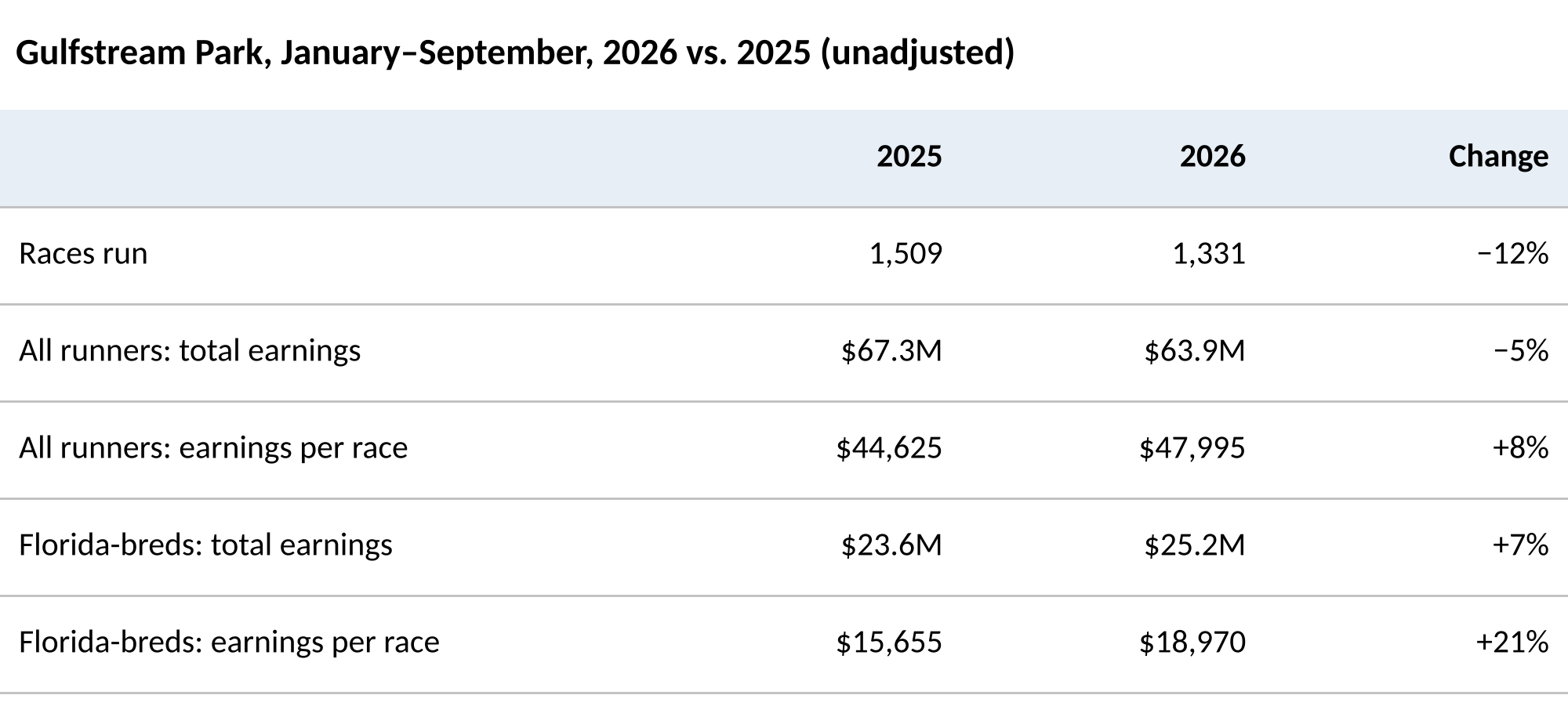
Florida-bred growth came against a shrinking purse base: through September, Gulfstream has run 12% fewer races and paid out 5% less in total purse earnings. Over the same stretch, unadjusted Florida-bred earnings are up 7%, from $23.6 million in 2025. Per race, Florida-breds are earning 21% more, against 8% more for all runners.
Gulfstream Park: Participation
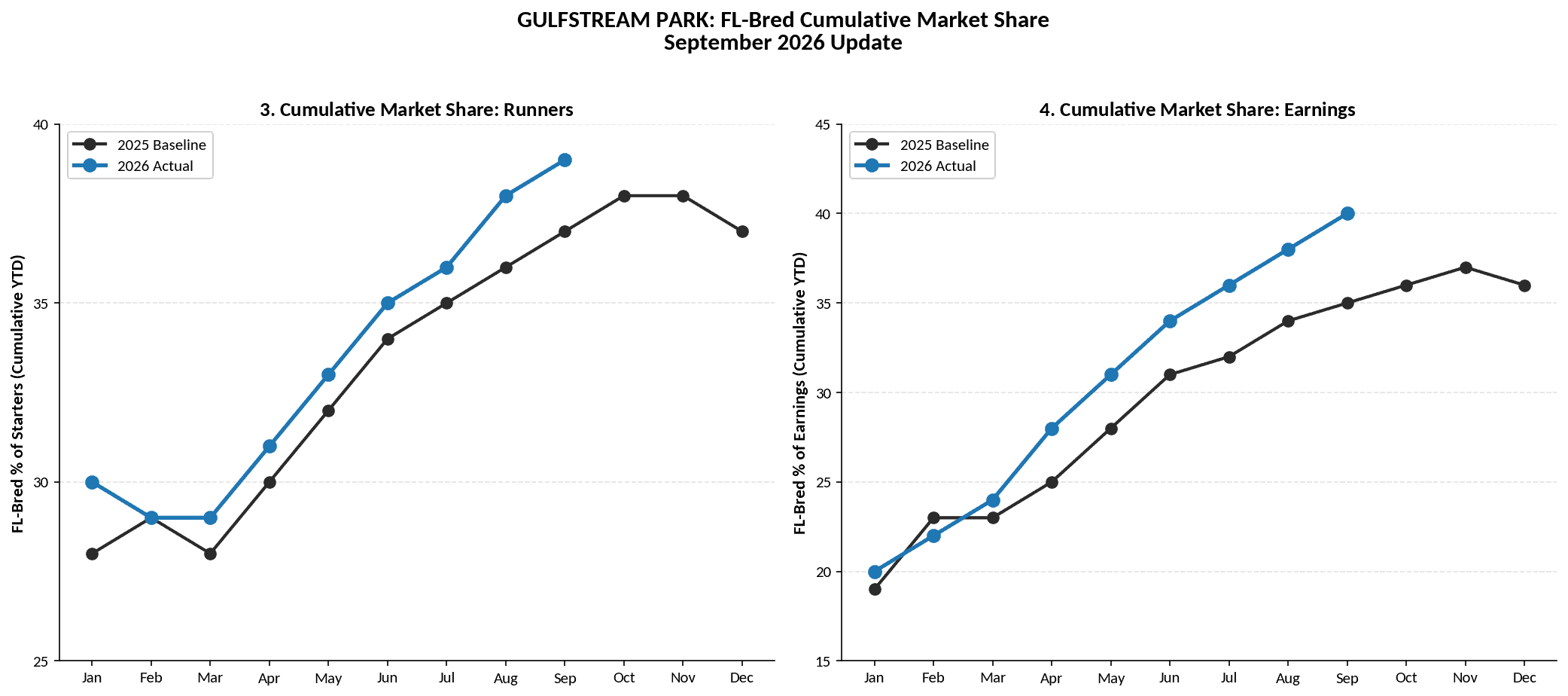
Florida-breds represent 39% of starters and 40% of earnings through September, both running ahead of the January – September 2025 comparison (37% and 35%, respectively). Panel three tracks the cumulative share of starters and panel four the cumulative share of earnings, each against the 2025 pattern.
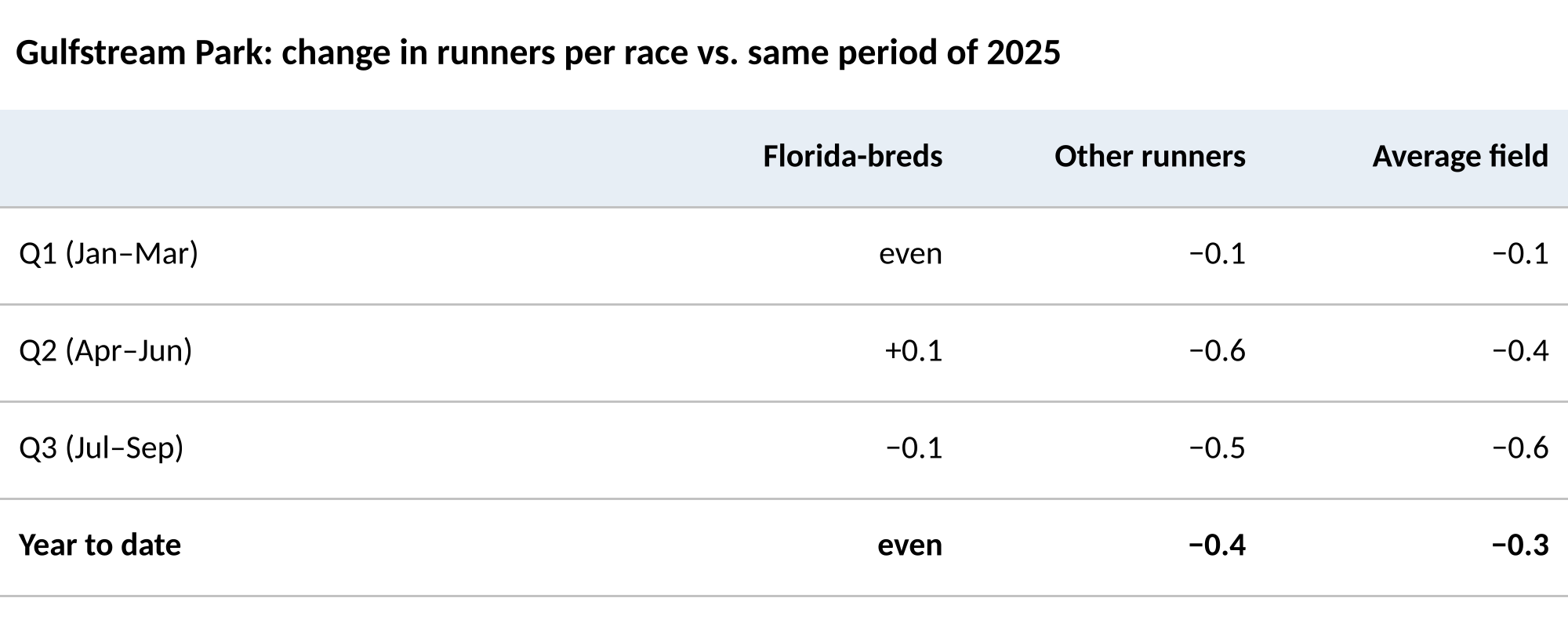
Florida-bred participation per race has held level while the rest of the field thinned. Through September, Florida-breds are averaging 2.8 runners per race, the same as in 2025, while other runners are down from 4.8 to 4.4 and the average field from 7.6 to 7.3. As the table below shows, the thinning has come almost entirely from other runners and has deepened since the first quarter. Because Florida-breds have not shared in the decline, their share of starters has risen.
Tampa Bay Downs: Meet Complete
Tampa Bay Downs’ 2025-2026 racemeet concluded May 3rd, and we reported the final figures in the July update. Florida-breds earned $8.7 million – $571,000 ahead of the 2024-25 baseline and $36,000 ahead of maximum expectations – and finished the meet at 34% of starters and 38% of earnings, up from 32% and 37% the year before. Tampa Bay Downs put the new state money to work so completely that Florida-breds exceeded full pass-through, and then some. Hats off to them.
PERIODIC UPDATES
We will periodically update this report throughout 2026, comparing actual Florida-bred participation and earnings against the anticipated trajectories.
Steve Koch
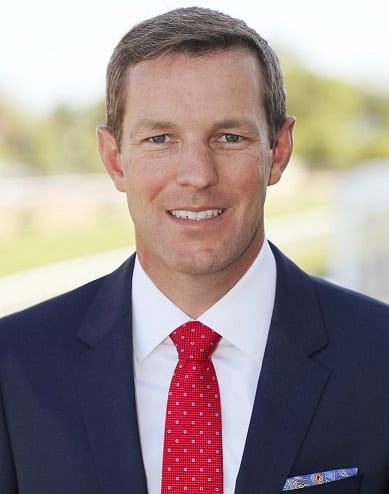
Steve Koch is Administrative Vice President and industry economist for the Florida Thoroughbred Breeders’ and Owners’ Association.
Return to the October 21 issue of Wire to Wire
